Our Blog

AI-Infused Experience-Driven Enterprise Architecture
For decades, Enterprise Architecture (EA) has focused on designing systems for people — structured, controlled, and meticulously documented.
But now, Artificial Intelligence changes everything.
With AI, we can build systems that don’t just serve people — they understand them.
AI transforms experience-driven EA from static, one-time blueprints into living, breathing systems that sense, learn, and adapt in real time.
The Evolution of Experience-Driven EA
Here’s what this transformation looks like in action:
→ Personalized Enterprise Experiences
AI models continuously analyze user behavior, preferences, and context to tailor experiences dynamically.
From employee dashboards to customer journeys, interfaces and workflows evolve on the fly — ensuring every interaction feels relevant, efficient, and human-centered.
→ Natural Language Interfaces for Architecture
Imagine querying your enterprise architecture like you would talk to a colleague:
“Show me systems dependent on our CRM.”
“Which processes are most affected by compliance changes?”
AI enables natural language interaction with architecture data — democratizing access and making EA usable by everyone, not just architects.
→ Predictive Experience Management
AI doesn’t just react — it anticipates.
Through predictive analytics, systems can spot friction before it happens:
workflow delays, user drop-offs, or compliance risks are identified early, with recommendations for proactive adjustments.
This transforms experience management from a reactive process to a strategic advantage.
→ Cognitive Feedback Loops
Experience data — such as user satisfaction, interaction frequency, and behavioral trends — feeds directly back into architecture models.
EA becomes a self-improving ecosystem, where every action informs the next design decision.
In other words, the architecture learns from its users.
→ Human-AI Collaboration Patterns
Modern EA must define how humans and AI agents work together.
Where does human judgment add the most value?
Where can AI take over repetitive cognitive tasks?
By modeling these collaboration points, architects can balance automation with intuition, ensuring technology augments human expertise — not replaces it.
→ Experience as a Capability
With AI infused into every architectural layer, experience design emerges as a measurable enterprise capability.
No longer a “soft skill,” experience becomes a strategic differentiator — a core metric of enterprise performance and adaptability.
From Control to Context
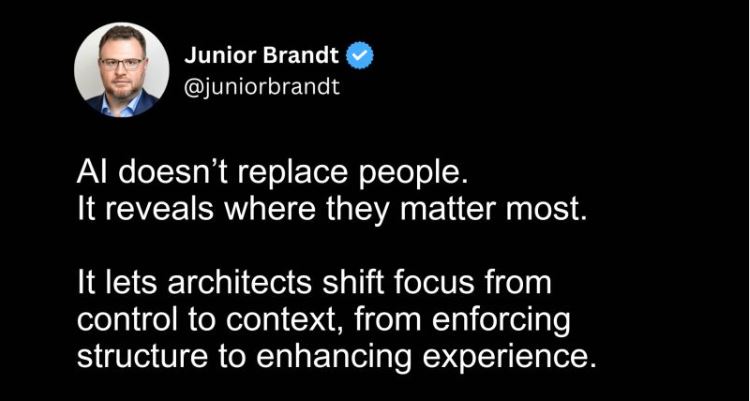
AI doesn’t replace people — it reveals where they matter most.
It shifts the architect’s role from enforcing control to enhancing context — from designing rigid systems to curating adaptive experiences.
Experience-driven EA with AI isn’t just about usability.
It’s about creating enterprises that learn from interaction, evolve with intent, and empower humans to become co-designers in real time.
In the New Model of Enterprise Architecture:
Humans aren’t just system users.
They’re system designers — shaping their digital environment with every decision, every click, every insight.
That’s not the future of EA.
That’s the present — powered by AI, driven by experience.
Related Articles