Our Blog

Governance by Tool vs Governance by Design
Many enterprises believe governance improves when they buy the right tool.
Policy tools. Risk tools. Compliance tools.
Dashboards multiply - but outcomes don’t.
That’s governance by tool.
Governance by Tool
In this model, rules are enforced inside systems, often inconsistently, after decisions are already made. Governance becomes fragmented, reactive, and dependent on how each tool interprets policy.
Governance by Design
Governance by design takes a different approach.
Governance is embedded into the architecture itself:
- Shared semantics and data definitions
- Machine-readable policies
- Clear decision boundaries
- Consistent enforcement across platforms
Tools support governance - they don’t define it.
The difference is subtle but critical.
The Shift in Thinking
Governance by tool asks:
“Which system enforces this rule?”
Governance by design asks:
“How is intent enforced everywhere, by default?”
The Outcome
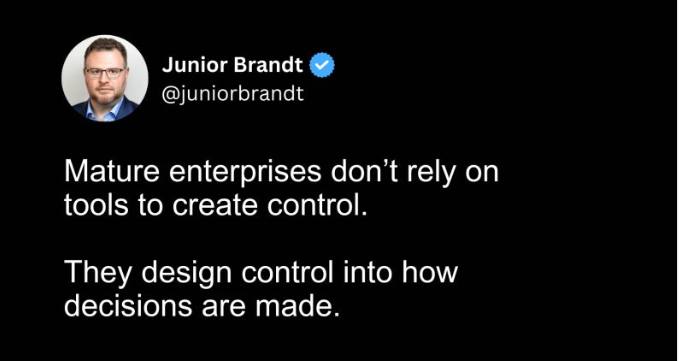
Mature enterprises don’t rely on tools to create control.
They design control into how decisions are made.
That’s when governance stops slowing the business down -
and starts enabling it.
Related Articles