Our Blog

How to Integrate Businesses Without Breaking Them
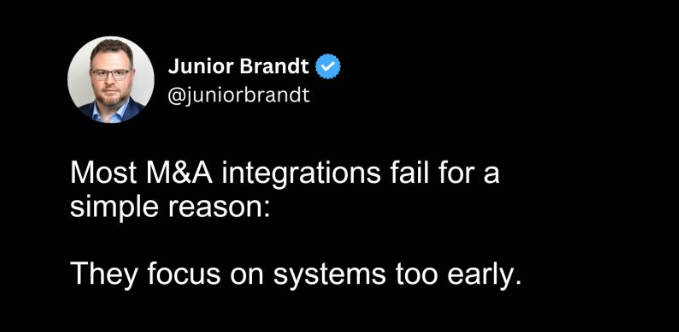
Most M&A integrations fail for a simple reason:
They focus on systems too early.
ERP consolidation. Application rationalisation. Data migration.
Important steps - but not the right starting point.
Successful integration begins with business capabilities.
Starting with Capabilities
Capability models provide a neutral, business-first lens to answer the real questions after a deal closes:
- What does each organisation actually do?
- Where do capabilities overlap?
- Which capabilities are strategic, redundant, or missing?
- Where should we integrate, coexist, or divest?
By mapping both organisations at the capability level, enterprises avoid the trap of forcing one system landscape onto another.
Designing Around Outcomes
Instead, they design a target operating model driven by outcomes, not tools.
What This Approach Enables
This approach enables:
- faster synergy realisation
- clearer investment priorities
- reduced integration risk
- cleaner technology decisions
Systems Follow Capabilities
Systems then follow capabilities - not the other way around.
The Integration Blueprint
In complex M&A environments, capability models become the integration blueprint, aligning strategy, operations, and technology without disrupting the business.
The Key Insight
The fastest integrations don’t start with IT.
They start with a shared understanding of what the business must be able to do.
Related Articles